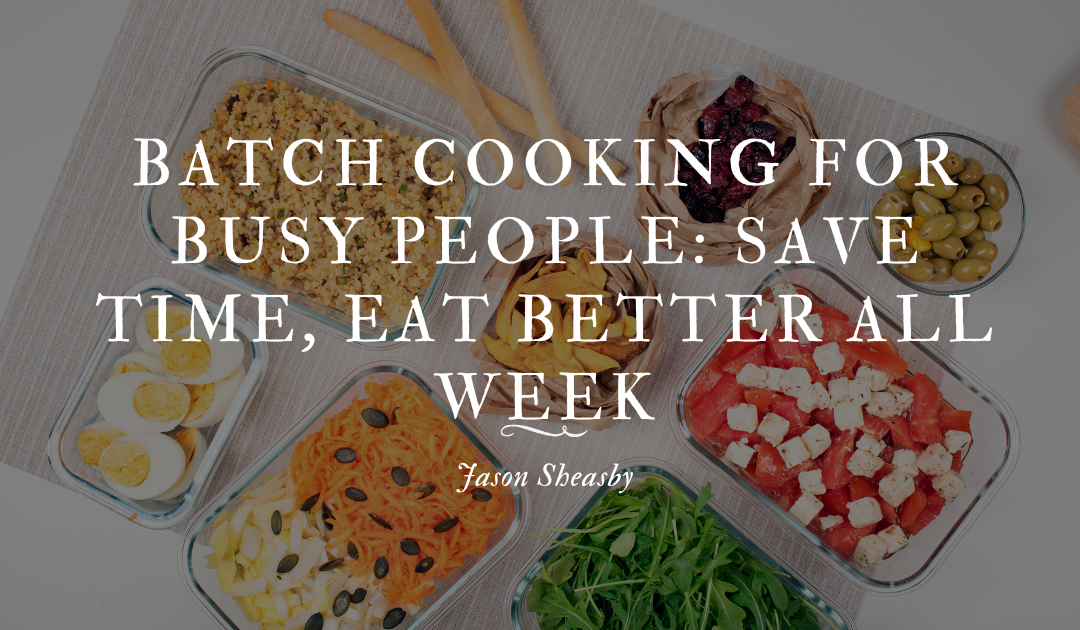
When life gets busy, cooking is often the first thing to fall apart. You start the week with good intentions, but by midweek you’re tired, short on time, and reaching for takeout. Batch cooking offers a simple way out of that cycle. By preparing key ingredients or full meals in advance, you can save time, reduce stress, and still eat well all week.
The best part? It doesn’t require an entire Sunday locked in the kitchen. With a practical approach, batch cooking can fit into even the busiest schedule.
What Batch Cooking Really Means
Batch cooking isn’t about making seven identical meals and forcing yourself to eat them all week. Instead, it’s about preparing food in larger quantities so you can mix and match meals later.
Think of it as building blocks:
- Cooked proteins (chicken, beans, ground meat)
- Grains (rice, quinoa, pasta)
- Roasted or raw vegetables
- Simple sauces or dressings
With these ready to go, putting together meals becomes quick and effortless. A bowl, wrap, salad, or stir-fry can come together in minutes.
Start Small and Keep It Simple
One of the biggest mistakes people make is trying to do too much at once. If you’re new to batch cooking, start with just two or three items.
For example:
- A batch of roasted vegetables
- Cooked rice or quinoa
- Grilled or baked chicken
That alone can carry you through several meals. As you get more comfortable, you can expand your routine—but simplicity is what makes it sustainable.
Choose Recipes That Reheat Well
Not every dish is ideal for batch cooking. Focus on meals and ingredients that hold up well in the fridge and taste good the next day.
Great options include:
- Soups and stews
- Casseroles
- Grain bowls
- Stir-fries
- Roasted meats and vegetables
Foods with sauces or moisture tend to reheat better than delicate dishes. This keeps your meals enjoyable instead of feeling like leftovers you’re forcing yourself to eat.
Use a “Mix and Match” Strategy
Instead of planning full meals for each day, think in combinations. This keeps your meals from feeling repetitive.
For example:
- Rice + chicken + roasted vegetables + sauce
- Wrap with leftover protein, greens, and dressing
- Salad topped with grains and cooked veggies
- Stir-fry using pre-cooked ingredients
By changing sauces or seasoning, you can turn the same base ingredients into completely different meals.
Schedule a Realistic Prep Time
Batch cooking doesn’t need to take hours. Even 60–90 minutes once or twice a week can make a big difference.
Pick a time that works for you:
- Sunday afternoon to prepare for the week
- Midweek reset (like Wednesday evening)
- Splitting prep into shorter sessions
The key is consistency. A small, regular effort is far more effective than occasional, overwhelming prep days.
Store Food the Right Way
Good storage keeps your food fresh and safe to eat. Use airtight containers and portion meals when possible.
A few simple tips:
- Store cooked food in the fridge for up to 3–4 days
- Freeze portions you won’t eat right away
- Label containers if needed (especially for freezing)
Having meals ready to grab and heat removes friction, making it easier to stick with your routine.
Don’t Forget Quick Backup Options
Even with the best plan, some days won’t go as expected. Keep a few easy backup meals on hand for low-energy days.
Examples:
- Eggs or omelets
- Frozen vegetables with pre-cooked protein
- Simple sandwiches or wraps
Batch cooking is there to help you, not box you in. Flexibility is what keeps it working long-term.
Save Time Without Sacrificing Quality
Batch cooking isn’t just about efficiency—it’s about making your life easier while still enjoying what you eat. When you have meals ready, you’re less likely to skip meals or rely on less satisfying options.
You’ll also spend less time cleaning, since you’re cooking in fewer sessions instead of every day. That alone can be a huge relief during a busy week.
Make It a Habit, Not a Chore
The goal isn’t perfection. Some weeks you’ll prep more, some weeks less. What matters is building a habit that supports your lifestyle.
Start with one session this week. Keep it simple. Notice how much time and energy it saves you over the next few days. Once you experience that difference, batch cooking becomes less of a task and more of a tool you rely on.